
What Is Dry Cleaning?
When you can’t decipher the dots, lines and symbols on your favourite dress or that special suit: you book a slot with our professional dry cleaners and we come to collect your clothes.
You can then get on with the rest of your day while we dry clean, press, finish and redeliver your laundry back to your doorstep.
But have you ever wondered how we take out those stubborn stains and revive your beloved clothes, reminding you why you fell in love with them in the first place?
- So what exactly is dry cleaning?
- How does dry cleaning work?
- Why is it called “dry” cleaning?
- When was dry cleaning created?
- What solvents are used in dry cleaning?
- How long does dry cleaning take?
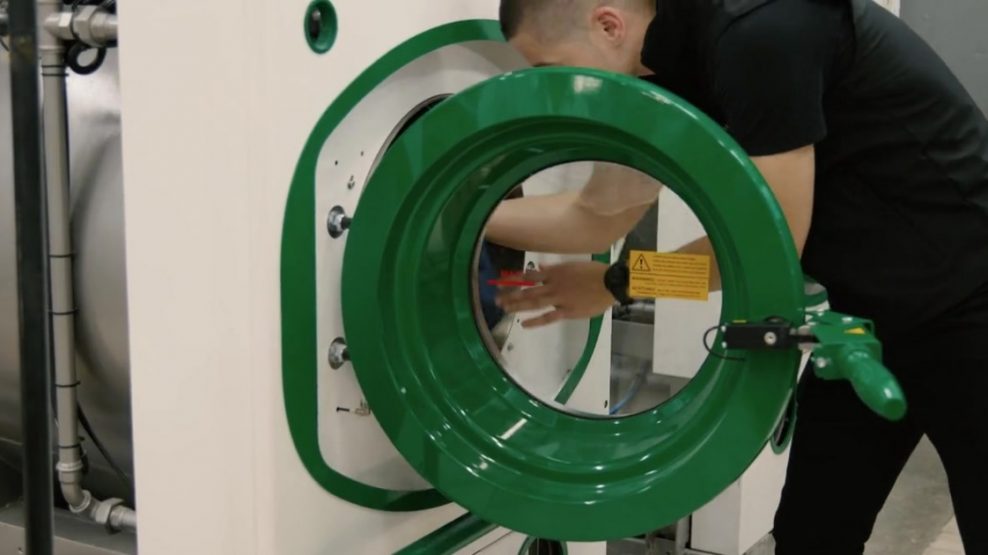
- How does a dry cleaning machine work?
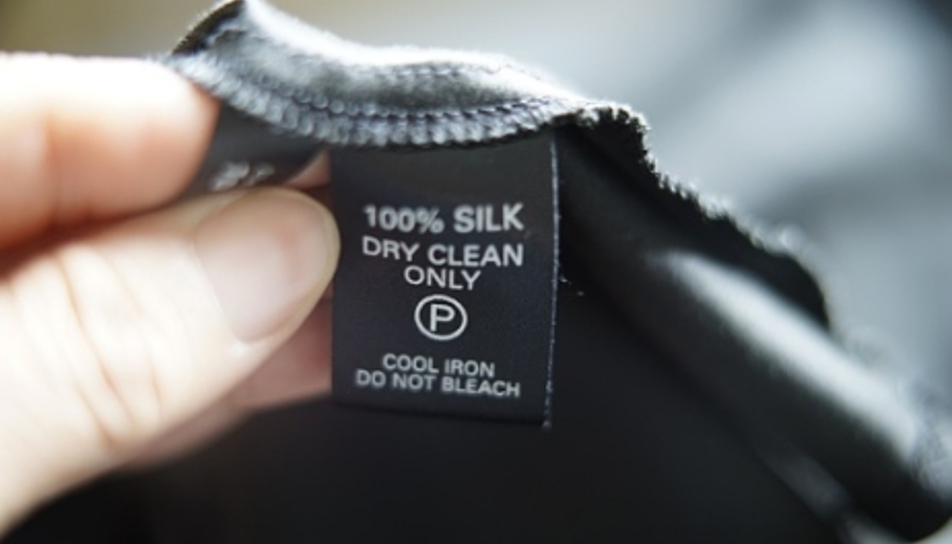
- How to know if clothes should be dry cleaned?
- Does dry cleaning include ironing?
- How do I get quality dry cleaning?
- Where can I find a dry cleaner near me?
So What Exactly is Dry Cleaning?
Contrary to its title, dry cleaning isn’t entirely a ‘dry’ cleaning. Chemical solvents are used instead of water to dissolve and remove stains.
The industry’s most popular solvent used is PERC, also known as Tetrachloroethylene or under the systematic names of Tetrachloroethene or perchloroethylene. PERC is a chlorocarbon with the formula of Cl2C=CCl2. It’s a colourless liquid and has a sweet scent. Other cleaning solvents also used include Hydrocarbon, Dibutoxymethane, Liquid silicone, Brominated solvents, Supercritical CO2, Glycol ethers and a handful of Modified Alcohols.
Still the preferred solvent in the dry cleaning industry, Tetrachloroethylene faces both environmental and health and safety regulations which will see Britain following in the footsteps of Germany and the US by banning its use and adopting new environmentally friendly practices.
How Does Dry Cleaning Work?
Before cleaning, each garment is individually inspected to decide the best method of dry cleaning and what solvents to use. A great deal of effort goes into the complete process and there are a handful of skilled professionals involved in caring for your garments behind the doors of our operation centres. You can explore the entire process here.
Garment Inspection and Stain Identification
Before cleaning, garments are inspected for their fabric, care instructions, construction and stains. Identifying the type of stain is important, as oil, food, drink and other marks can require different treatments.
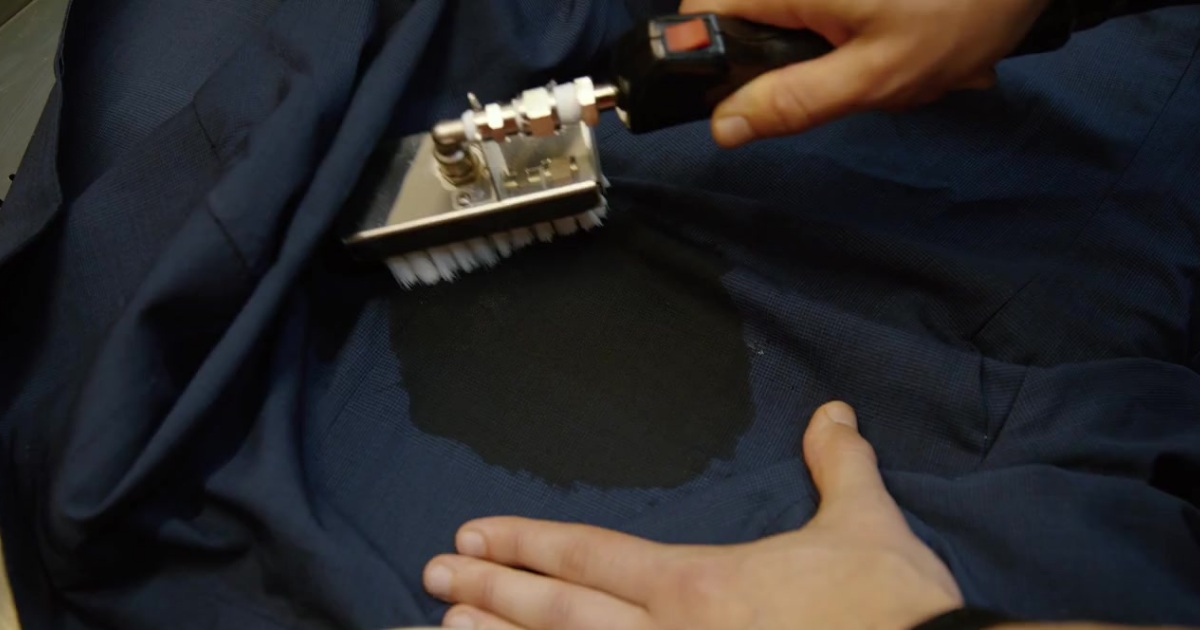
Pre-Treatment of Stains
Stains that need extra attention are treated before cleaning, a process often called pre-spotting. The cleaner chooses a treatment based on the stain and fabric to help remove it without damaging the fibres or colour.
Cleaning With Solvent Instead of Water
Garments are placed in a specialist machine where a dry-cleaning solvent circulates through the clothes. Solvents are particularly effective at dissolving oils and grease and can safely clean many garments that aren’t suited to conventional washing.
Modern dry-cleaning machines are designed to filter, recover and reuse cleaning solvent. Depending on the system, filtration and distillation remove soils and contaminants so the solvent can be recycled within the machine.
Drying and Solvent Removal
After cleaning, the solvent is drained and recovered. Controlled warm air removes the remaining solvent from the garments, while vapour is captured and condensed back into liquid for reuse.
Pressing, Finishing and Final Inspection
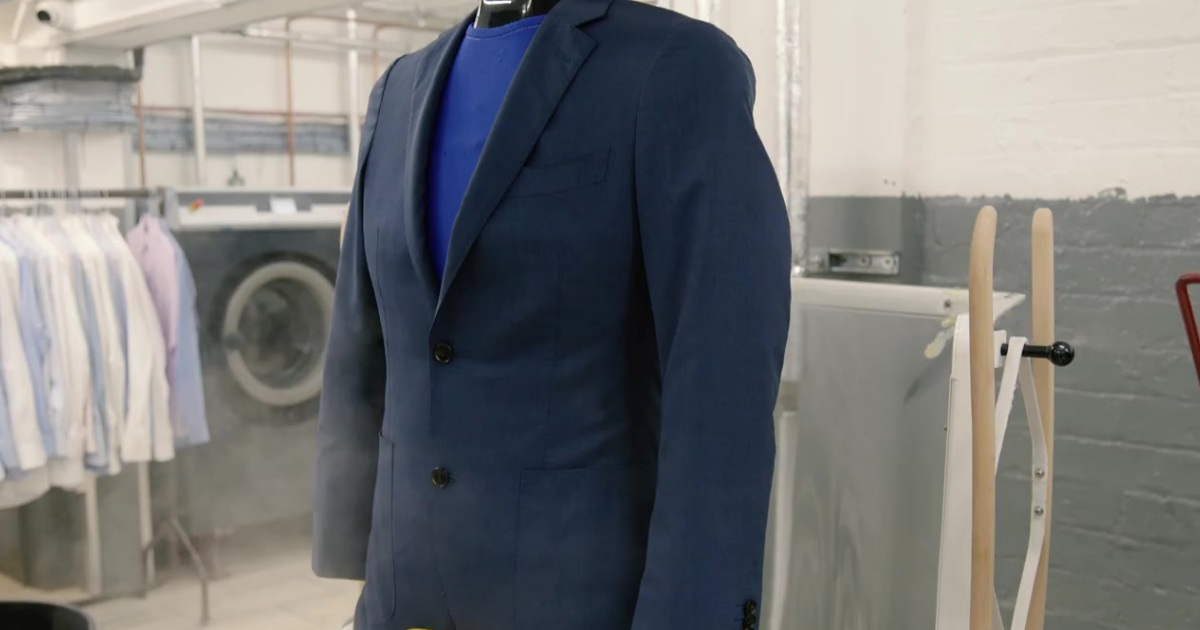
Finally, garments are professionally pressed, steamed or hand-finished to restore their shape and appearance. A final inspection checks the finish and identifies any stains that may require further treatment.
Why Is It Called “Dry” Cleaning?
Despite the name, dry cleaning isn’t completely dry. Garments are still cleaned with solvent rather than water.
This can help protect fabrics and garment structures that may shrink, distort or change when exposed to conventional washing. Dry cleaning solvents are also particularly effective at removing grease and oil-based stains.
When was dry cleaning created?
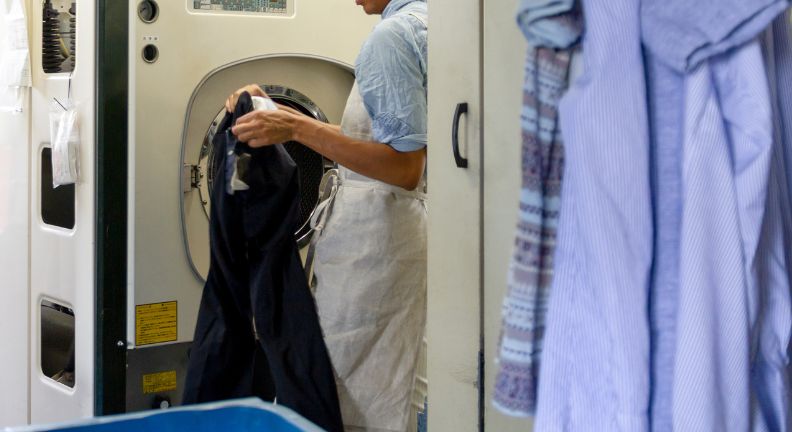
Many of us may view dry cleaning as a modern convenience, but believe it or not, dry cleaning is older than you think it is. As with any story arising out of the Ancient times, this is a fascinating one. This tale of evolution calls on the collection of buckets of urine from Roman bathhouses, all the way to the emergence of door to door dry cleaners.
You can relive the history here.
What Solvents Are Used in Dry Cleaning?
Perchloroethylene (perc or PCE) has historically been one of the most widely used dry-cleaning solvents, but alternatives such as hydrocarbon and other specialist solvents are also used.
Professional cleaners choose an appropriate cleaning method based on the garment’s fabric, construction, staining and care instructions rather than treating every item in the exact same way.
How Long Does Dry Cleaning Take?
The dry cleaning process itself is quick, and takes between 1 to 1.5 hours. However, you’d need to factor in additional time for inspection, stain treating before the item is cleaned, and then pressing and finishing after.
With ihateironing’s dry cleaning service, you can get your items collected, professionally dry cleaned, and returned in as little as 24 hours, while many high street dry cleaners may require anywhere between 1 to 3 days for everyday items.
Read more about how long dry cleaning takes.
How does a dry cleaning machine work?
Dry cleaning machines are diverse, but despite their differences, they all perform on the same principle and function.
A dry cleaning machine is formed of four basic components:
Tank – This is where the dry cleaning solvent is held.
Pump – Until it is pumped through the machine.
Filter – Here filtration is used to separate and collect solid impurities.
Drum – Stainless Steel and perforated, this is the core of the machine where the load is placed to be cleaned.
The process of the dry cleaning machine is a simple one that may seem quite familiar to you.
STEP 1
At 30°, the solvent is drawn from the tank by the pump. The pump pushes the solvent through the filters to separate, collect and trap any impurities. The filtered solvent will then run into the drum and fill around one-third of the drum, flushing soil from your garments while the ribbed drum walls rotate and gently lifts and drops the garments.
The unclean solvent is continuously drained back to the tank. It is filtered and pumped back into the drum, thus beginning the cleaning cycle. This is repeated for the duration of the 8–15 minutes (or 25 minutes for hydrocarbon solvents) cycle. In the first 3 minutes solvent soluble soils dissolve and loosen. It then takes 10-12 minutes for the removal of the more stubborn ground-in solubles.
STEP 2
At the end of the cleaning cycle, the solvent is drained into a distillation unit made up of a boiler and condenser before it is fed back into the tank as a fresh distilled solvent. Rinsing with this solvent prevents discolouration caused by soiled particles being absorbed back onto the garment surface from the solvent while it is unclean.
Following this, the solvent is drained during an increased speed of rotation known as the extraction cycle to expel excess solvent from the clothes. Here, the solvent is drained back to the tank and is recovered for reuse.
Until this time, the cleaning is done at normal temperature as the solvent is never heated in the dry cleaning process. Once all solvent has been removed, the machine will start a drying cycle of 60-63° degrees where warm air circulates through the cylinder, vaporising the remaining fumes and solvents. The solvent vapours are then purified, heated and then condensed over cooling coils back to liquid form so it can be pumped back into the tank.
STEP 3
Once the drying cycle is complete, an aeration (deodorising) cycle cools the garments. It removes any residue of solvent by circulating cool air in the drum over your garments. After this, your laundry will be clean and ready for pressing and finishing.
How do I know if my clothes need to be dry cleaned?

Your item’s care label will tell you exactly how it should be cleaned:
- If the care label has a small circle the manufacture is stating you must dry clean this item.
- If there is a little letter inside the circle it’s indicating to the dry cleaner what chemical to use.
- The more bars underneath the circle indicate the level of precaution the dry cleaner must take.
- If there is a cross over the circle symbol you should not dry clean the item.
Does dry cleaning include ironing?
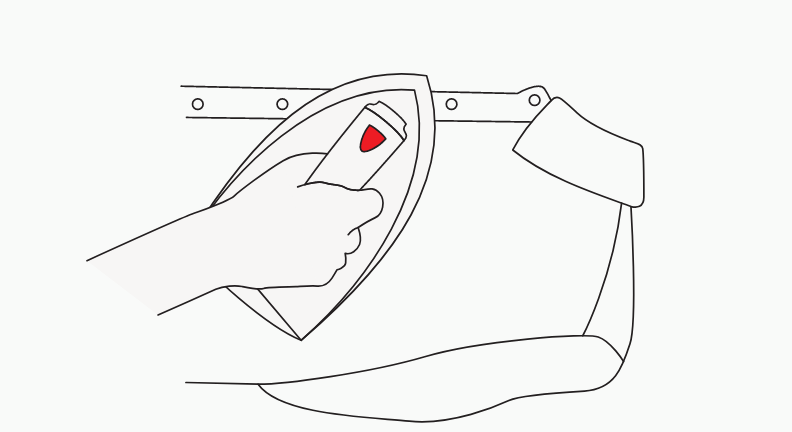
When you send your items in for dry cleaning, all parts of the process will be taken care of. This includes the ‘finishing’ of your clothes, which involves pressing, steaming or ironing the garments to make sure they come out crease-free.
How do I get high quality dry cleaning?
It’s an industry-established fact that the quality of cleaning, degree of soil removal, colour brightness, odour and softness all hinge on the comprehensiveness with which the dry cleaner controls his filter, solvent condition and moisture.
Quality control is interchangeable and can vary day to day, so it’s only right to go with a reputable industry professional by leaving your precious garments safely in our expert hands.
Where can I find a dry cleaners near me?
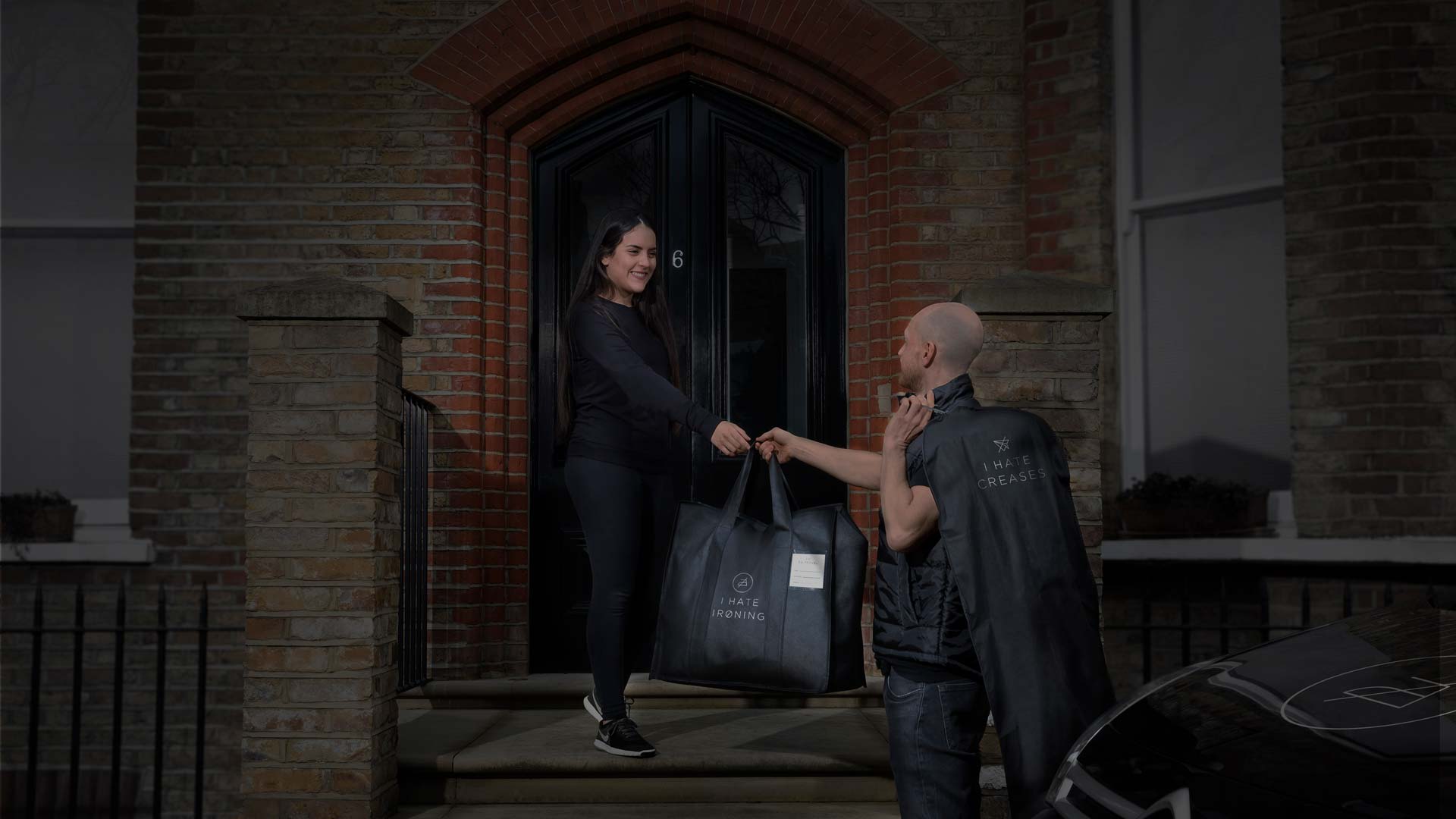
Dry cleaning centres are a staple high-street shop, but it can be difficult to find one that’s conveniently near you.
In an industry that’s always adapting to your needs, you can now opt in for on-demand dry cleaning where your clothes are picked up right from your doorstep and returned in 24 hours.
With a service like ihateironing, you don’t have to go out of your way to catch your local dry cleaners before they close, or carry heavy dry cleaning bags up and down the neighbourhood.
We work around your schedule to collect, expertly dry clean & press, and then deliver your items exactly when you need them – with none of the hassle.
In a few clicks, you can schedule a collection, and we’ll be on our way.


ihateironing is a network of professional dry cleaners providing the finest dry cleaning and laundry service with convenient collection and delivery at any times that suit you. We operate in London, New York, Brighton, Edinburgh, Oxford, and beyond.