
How To Get Rid of Iron Marks on Clothes
There is nothing more annoying than spotting an iron mark on a piece of clothing that was looking fine a moment ago. One minute you’re finishing off a shirt, the next you are wondering why it now has a suspicious streak across the front.
Some marks can be treated successfully, but the right approach depends on the fabric and the type of damage, and trying the wrong fix can sometimes make things worse.
What Causes Iron Marks On Clothes?
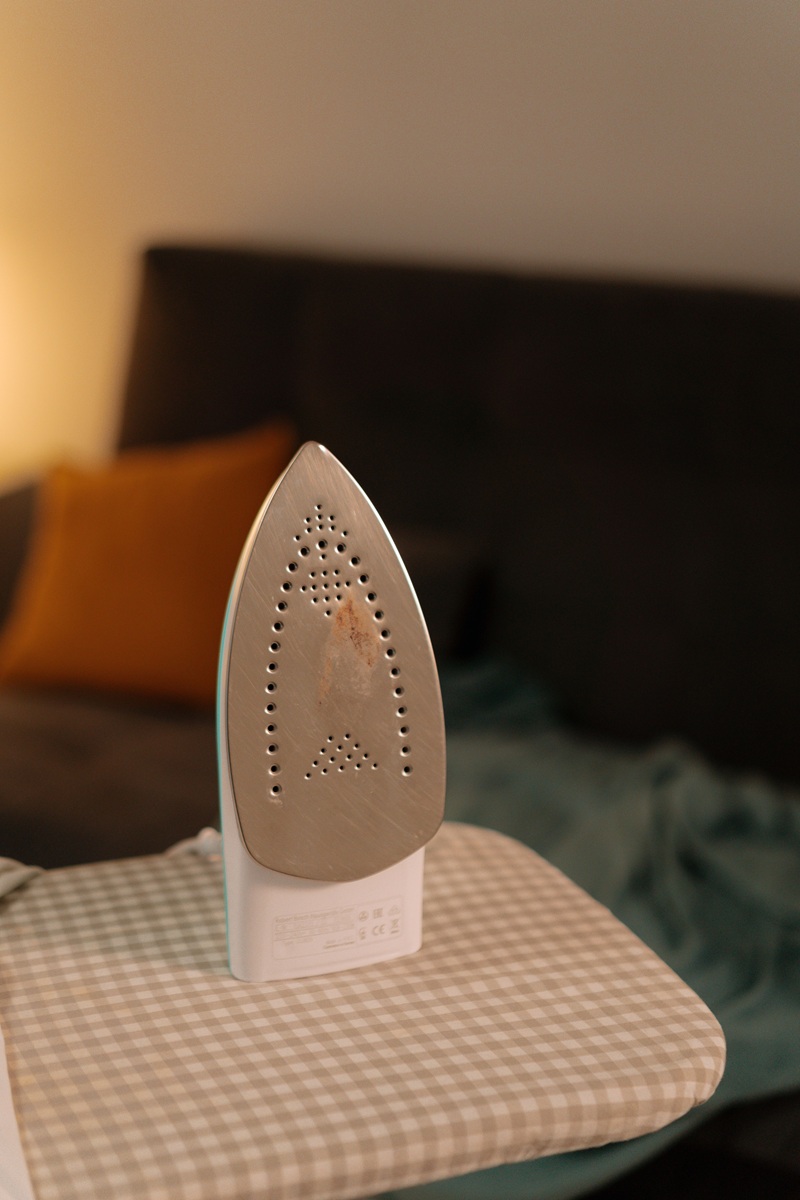
In most cases, using the incorrect temperature setting while ironing clothes leads to leaving iron marks on the fabrics. It’s very important to check the care label on your items to check whether it can be ironed, and on what setting.

- Your item can be ironed at any temperature if the care label iron symbol has no dots.
- The more dots on the iron symbol suggests the temperature of heat that can be applied:
- 1 dot: delicates i.e, silk and wool.
- 2 dots: synthetics.
- 3 dots: linen and cotton.
- If there is a cross over the iron symbol you should not iron the item.
Can Iron Marks Be Fixed?
Some iron marks can be improved, while others may only become less noticeable.
If the iron has left residue on the surface, or flattened the fibres enough to create shine, there is often some room for improvement. If the fabric has actually scorched, weakened or melted, the result is less certain. Cotton and linen may recover better than synthetic fabrics, which tend to react badly to excess heat.
It is worth approaching the garment with a light touch. Repeated scrubbing, soaking or experimenting with too many remedies can leave the fabric looking more worn than the original mark did.
The Main Types of Iron Marks
Iron marks usually fall into a few recognisable categories.
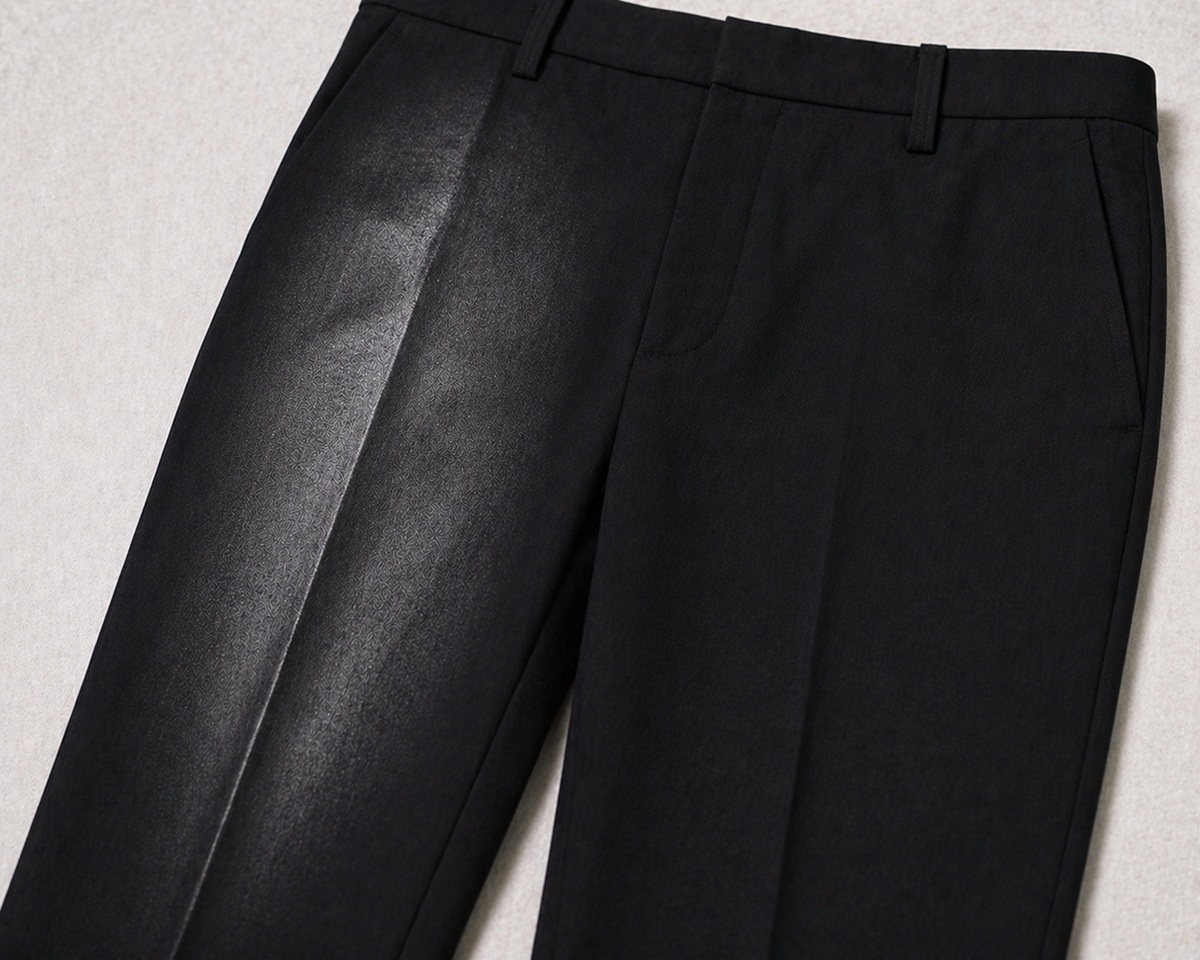
Shiny marks are common on darker fabrics, tailored clothing and schoolwear. They happen when the iron compresses the surface fibres and leaves an unwanted sheen, often on items such as black work trousers, blazers or school uniforms.
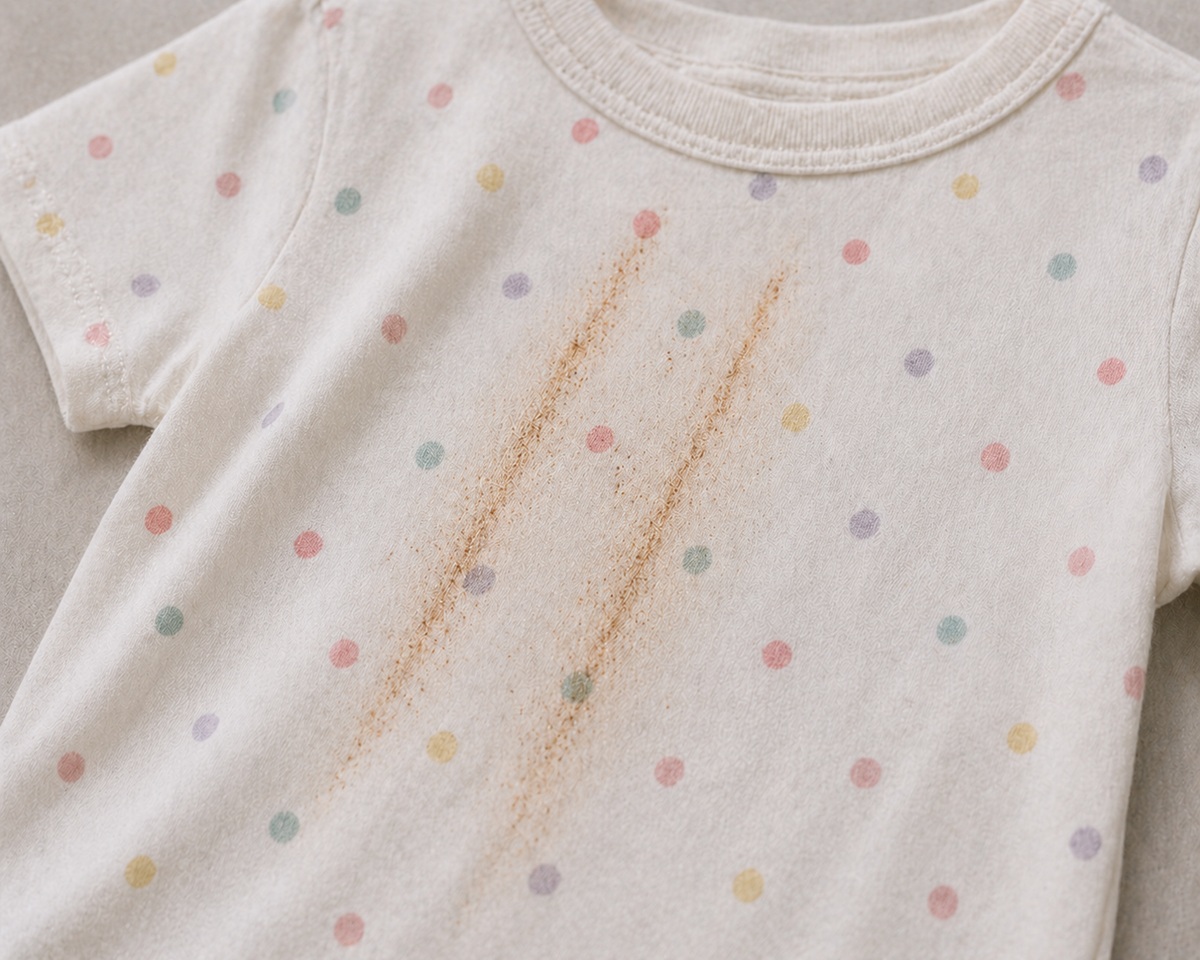
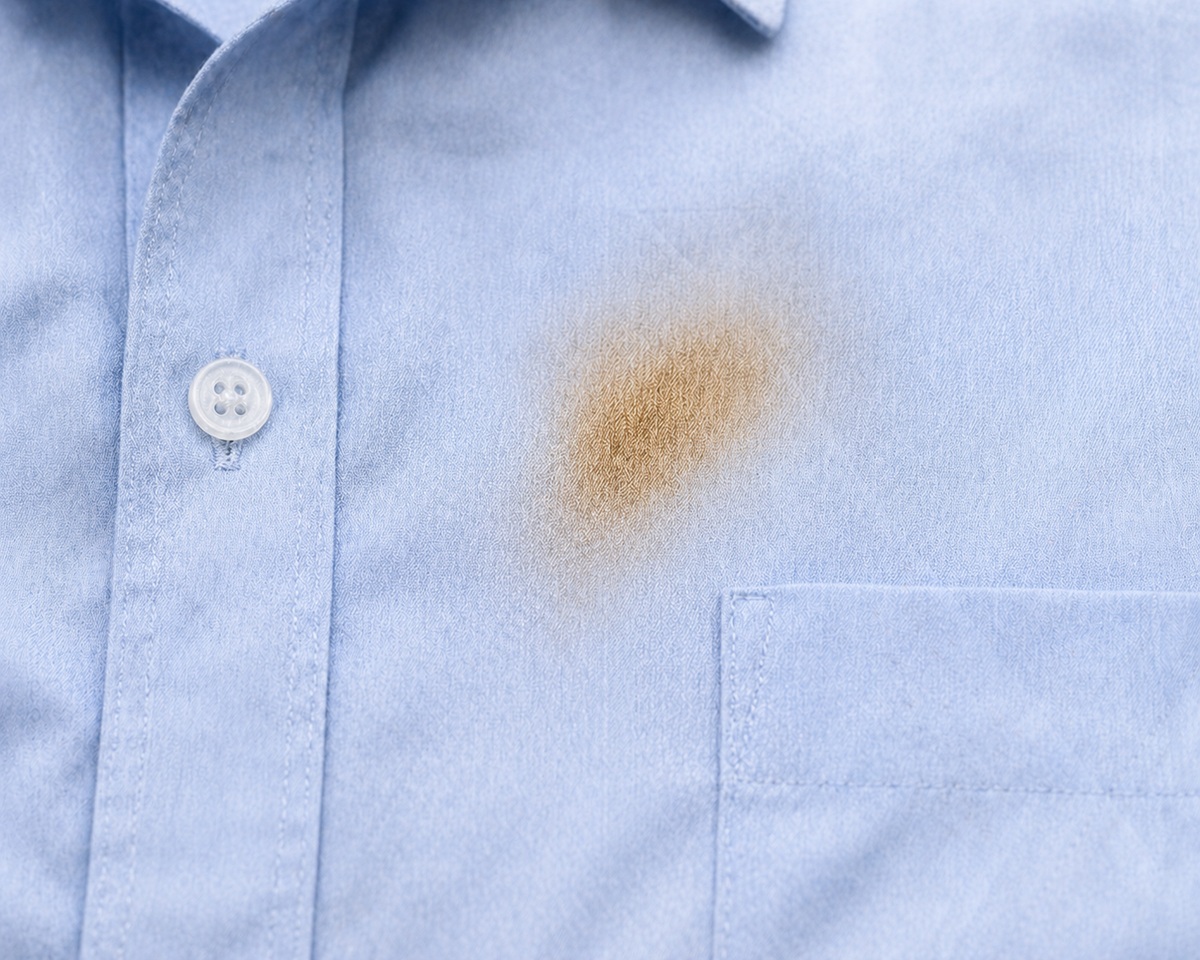
Scorch marks tend to appear as pale yellow, tan or light brown patches. These are caused by excessive heat applied to the fabric for too long and are often easier to spot on cotton shirts, pillowcases, or children’s school shirts.
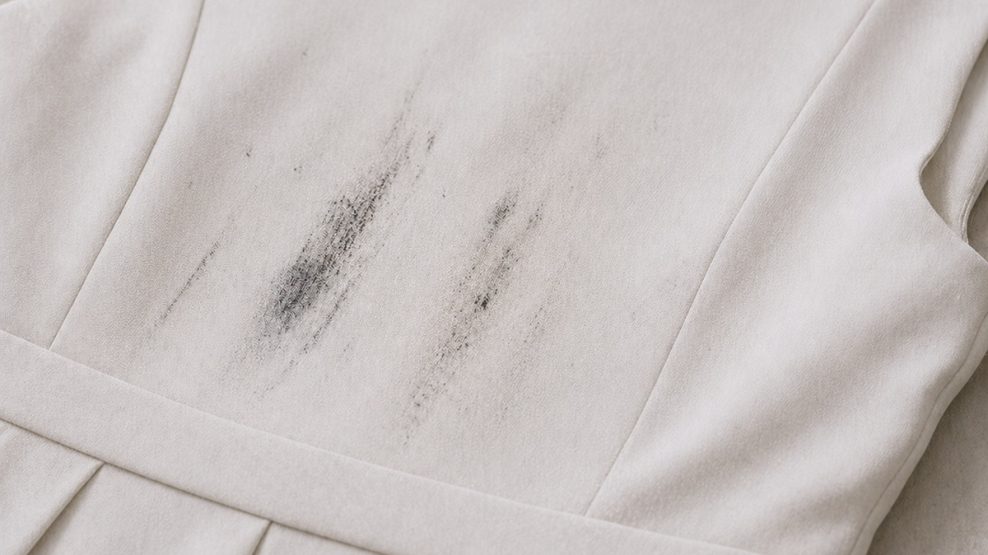
Black marks are often a transfer issue. Burnt residue, product build-up or dirt on the soleplate can end up on the clothing during ironing.
Brown or rust-coloured marks may appear if there are mineral deposits involved, especially where the iron has not been cleaned in a while.
Once you know which of these you are dealing with, it is easier to choose the right approach.
How To Remove Shiny Iron Marks
Shiny patches are often among the easier marks to deal with, especially when the fabric itself has not been scorched.
Lay the garment flat and lightly dampen the area with water. If the shine is more noticeable, a little white vinegar diluted with water may help. Place a clean pressing cloth over the area, then apply gentle steam without pressing too firmly. Afterwards, brush the surface lightly with a soft clothes brush if the fabric allows it.
This can help with wool blends, darker trousers, skirts and jackets where the issue is more about flattened texture than staining. For garments that need to keep a smart finish, some people prefer professional ironing services for fabrics that mark easily under direct heat.
How To Deal With Scorch Marks
Scorch marks need a slightly different approach. If the item is washable, start by rinsing the area in cool water. Then work in a small amount of gentle detergent and wash it according to the care label.
For lighter scorches on cotton or linen, dabbing the area with diluted white vinegar before washing may help lift the discolouration. White cotton can also benefit from drying in sunlight, which may soften the look of a mild scorch.
The condition of the fibres matters too. If the fabric feels rough, stiff or thinner where the mark sits, the heat may have affected it beyond the surface. You may still improve the appearance, but full recovery is less likely.
That is one reason good clothing care matters. Small mistakes can add up over time, while careful handling helps garments last longer.
How To Remove Black Iron Marks
Dark marks often point to the iron as the guilty party. Check the soleplate before treating the garment, as burnt residue, leftover starch, fabric finish or mineral build-up can all transfer onto fabric until the iron is cleaned properly.
On the garment, blot the mark gently with a mild detergent solution and a clean cloth. Avoid vigorous rubbing, especially on delicate fabrics, as this can spread the mark or roughen the weave. If the item is machine washable, laundering it soon afterwards may help lift what is left.
The key is to deal with both the mark and its source, otherwise the same thing may happen again.
What If The Damage Is Permanent?
Some iron marks do not lift completely. If the fibres are scorched, melted or permanently flattened, the best result may be partial improvement rather than a full return to normal.
At that point, the question becomes practical. You might keep the item for more casual wear, have it altered, or decide it is no longer worth saving. That can be particularly frustrating with workwear, occasionwear or favourite pieces that still had plenty of wear left in them.
It is also why sensible maintenance matters. Much of clothing care is less about dramatic rescue and more about helping garments hold their shape, finish and usefulness over time.
How To Avoid Iron Marks In Future
Prevention is usually easier than repair. Check the care label before ironing, use the right heat setting, and keep the soleplate clean. A pressing cloth can also help protect darker or more delicate fabrics, especially those that react badly to direct heat.
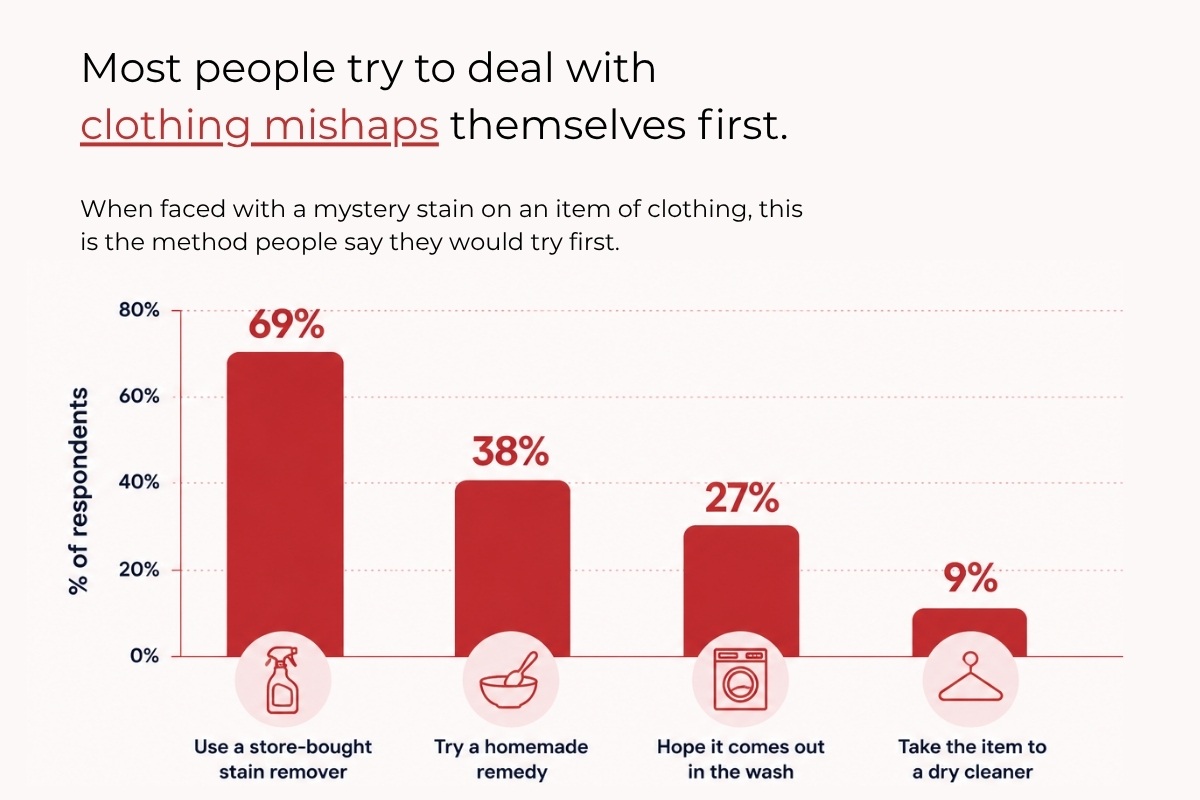
ihateironing’s study also suggests most people try to deal with clothing mishaps themselves first. 69% said they would use a store-bought stain remover if they found a mystery stain on an item of clothing, while 38% would try a homemade remedy and 27% would simply hope it came out in the wash. Only 9% said they would take the item to a dry cleaner.
For clothes you wear often, fabrics that mark easily, or pieces you would rather not risk, professional finishing can remove some of the guesswork. If you want to avoid the trial and error that comes with ironing at home, ihateironing’s ironing services offer a simple way to keep clothes looking well cared for.

ihateironing is a network of professional dry cleaners providing the finest dry cleaning and laundry service with convenient collection and delivery at any times that suit you. We operate in London, New York, Brighton, Edinburgh, Oxford, and beyond.