
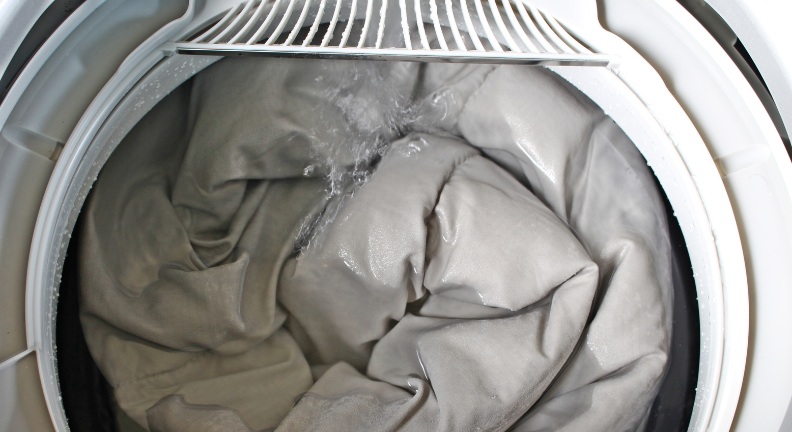
Can You Wash a Duvet in a Washing Machine?
You can wash a duvet in a washing machine, but only if the care label allows it and if your machine is large enough. While many synthetic duvets are suitable for machine washing, those with feather, down and delicate fillings would require more careful handling.
Before putting your duvet in the washing machine, it’s important to consider its size, filling and washing instructions. Cleaning incorrectly can damage the filling, cause clumping or leave your duvet damp inside, potentially leading to mould, unpleasant odours, or causing the duvet to lose its shape.
Here’s how to decide whether your duvet is safe to wash at home and when professional duvet cleaning is the better option. For more information on how to treat and clean duvets, check out our Essential Duvet Care Guide.
What Determines If a Duvet Is Machine-Washable?
Not every duvet is designed for domestic washing. Three main factors determine whether yours can be safely cleaned at home.
1. Duvet Filling and Material
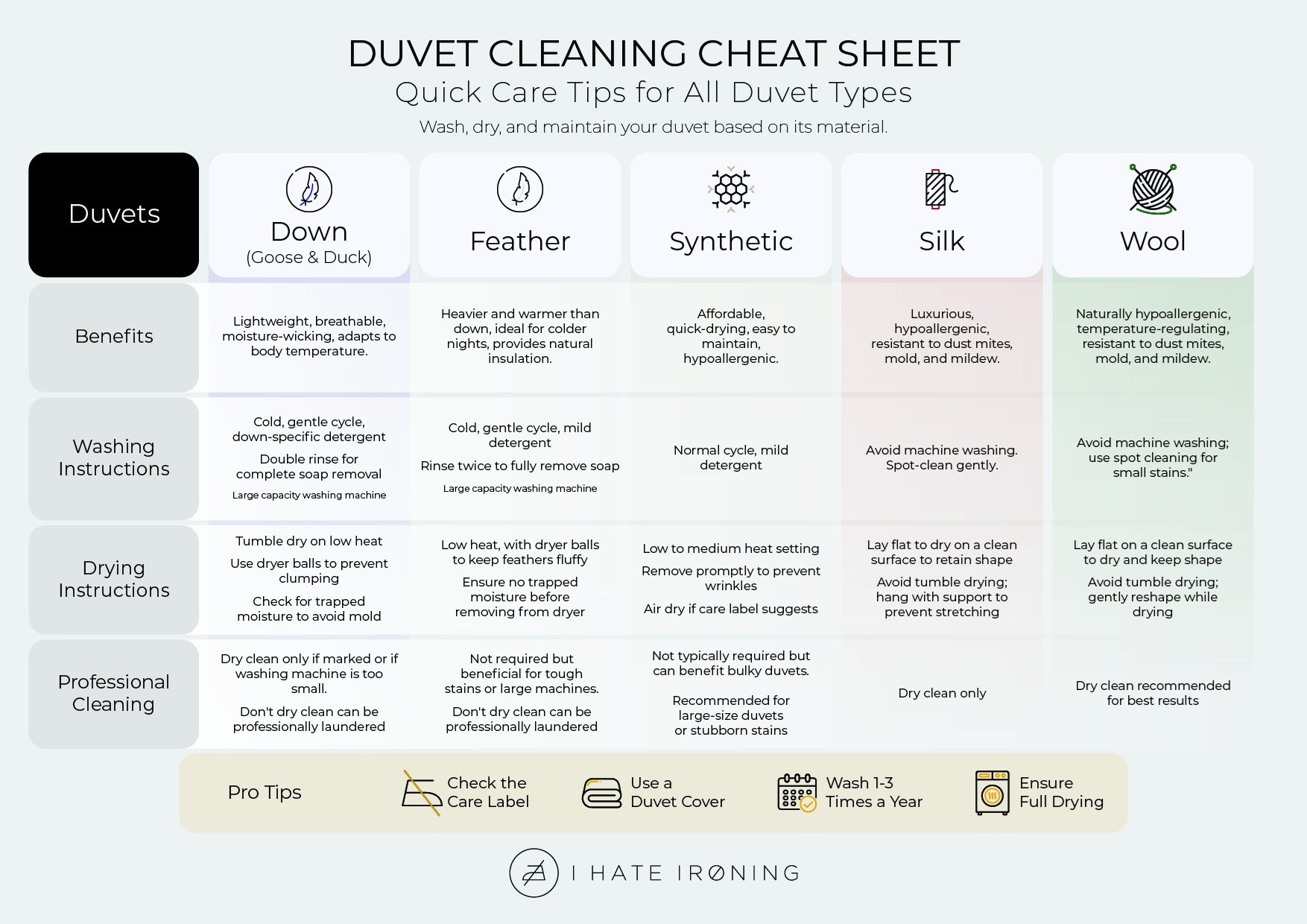
Different fillings react differently to water, detergent and agitation, so it’s very important to check the care label of your duvet.
- Synthetic duvets: Polyester and hollowfibre fillings are often machine-washable, if the care label permits it.
- Feather and down duvets: Some can be machine-washed, but require gentle cleaning and thorough drying to prevent clumping and damage. It’s generally advised not to wash these at home.
- Wool duvets: May shrink or felt when exposed to unsuitable washing conditions.
- Silk duvets: Often require specialist cleaning and shouldn’t be machine-washed.
2. Washing Machine Capacity
Even if your duvet is machine-washable, your washing machine must have enough capacity to accommodate it safely.
A single duvet may fit into some domestic machines, while double, king-size and super king-size duvets often require larger commercial equipment.
As a general guide, here’s the recommended washing machine capacity for different UK duvet sizes:
| Duvet size | Recommended washing machine capacity |
| Single (135 × 200 cm) | 7–8 kg |
| Double (200 × 200 cm) | 8–10 kg |
| King (225 × 220 cm) | 12 kg+ / Commercial Machine |
| Super King (260 × 220 cm) | 12 kg+ / Commercial Machine |
Remember: These are approximate guidelines for typical duvets, not guaranteed minimum capacities. Thick, high-tog, feather and down duvets may require significantly larger machines.
The duvet should fit comfortably inside the drum with enough room to move during washing. Forcing it into an undersized machine can result in poor cleaning, uneven rinsing and excessive strain on the appliance.
3. Care Label Instructions

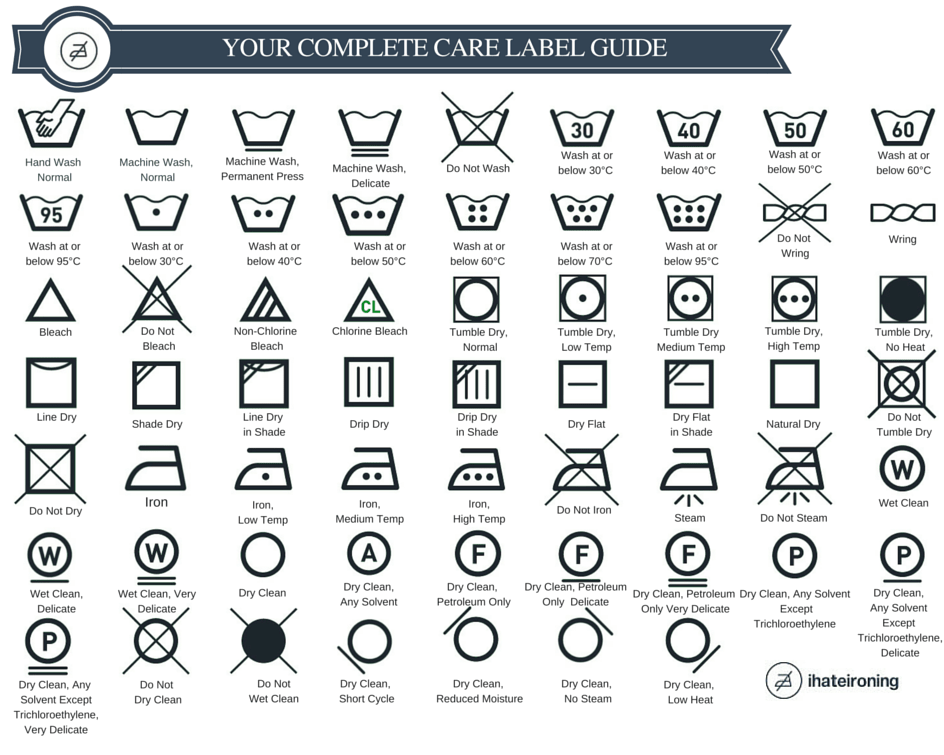
Always check the manufacturer’s care label before washing. It should indicate whether machine washing is permitted, the recommended temperature and any drying restrictions.
If the label is missing or unclear, professional cleaning is generally the safer choice.
When You Should NOT Wash a Duvet in a Machine
Even if your duvet looks like it could fit, machine washing isn’t always advisable.
Avoid washing your duvet at home if:
- The care label specifies dry cleaning or prohibits machine washing.
- The duvet is too bulky to move freely inside the drum.
- The filling is delicate or requires specialist treatment.
- The duvet has damaged seams or loose stitching that could worsen during washing.
- You cannot dry the duvet thoroughly afterwards.
If you’re unsure, professional duvet cleaning can help prevent avoidable damage.
How to Safely Wash a Machine-Washable Duvet
If you’ve confirmed that your duvet is suitable for machine washing, follow these steps to minimise the risk of damage.
- Check the care label: Confirm the permitted washing temperature and cycle.
- Inspect the duvet: Check for loose seams, tears and stains that may need attention.
- Load it loosely: Make sure the duvet has enough space to move freely inside the drum.
- Choose a suitable detergent: Use a mild detergent appropriate for the filling, avoiding excessive amounts.
- Select the correct cycle: Follow the care label, using a gentle cycle where recommended.
- Rinse thoroughly: Ensure detergent is properly removed, using an additional rinse if necessary and permitted.
Avoid overloading the machine or using a hotter wash than recommended. Both can affect the duvet’s filling and overall condition.
How to Dry a Duvet Properly
Can you tumble dry a duvet? Yes, some duvets can be tumble-dried, but only when the care label permits it.
Drying is one of the most important stages of duvet cleaning. Thick fillings can retain moisture even when the outer fabric feels dry.
If tumble drying is allowed, use the recommended heat setting and ensure the dryer is large enough for the duvet to move freely. Check the filling periodically and redistribute it gently to prevent clumping.
For duvets that require air drying, spread them out in a well-ventilated area such as a large drying rack and turn them regularly to avoid clumping or moisture in uneven areas.
Never put a duvet back on your bed or into storage while it’s still damp.
Common Mistakes When Washing a Duvet
Some of the most common duvet washing mistakes include:
- Overloading the washing machine: Prevents proper cleaning and rinsing.
- Ignoring the care label: Can lead to shrinkage, damaged fillings or fabric distortion.
- Using too much detergent: May leave residue trapped inside the duvet.
- Using excessive heat: Can damage certain synthetic and natural fillings.
- Not drying thoroughly: Allows moisture to remain trapped inside the duvet.
These mistakes are particularly common with larger duvets, which are harder to wash and dry effectively using domestic appliances.
How Often Should You Wash a Duvet?
Most duvets benefit from a thorough clean every 6–12 months, depending on their use, filling and manufacturer’s recommendations.
More frequent cleaning may be beneficial for households with pets, allergy sufferers or duvets exposed to spills and heavy use.
Using a washable duvet cover and cleaning it regularly helps protect the duvet itself, reducing the need for frequent deep cleaning.
Signs Your Duvet Needs Professional Cleaning
Professional cleaning is worth considering when your duvet is too large for your washing machine, has delicate fillings or requires more extensive stain treatment.
You should also consider specialist care if:
- The duvet has persistent stains or unpleasant odours.
- Its filling has become uneven or clumped.
- The care instructions are unclear.
- You’re concerned about drying it completely at home.
At ihateironing, we offer professional duvet cleaning with convenient doorstep collection and delivery. Our cleaning partners assess the material and filling to determine the appropriate treatment, helping protect your duvet while ensuring it’s thoroughly cleaned and dried.
For larger or more delicate duvets, professional cleaning removes the guesswork and helps keep your bedding fresh, comfortable and in good condition for longer.
Read more about duvet cleaning.

ihateironing is a network of professional dry cleaners providing the finest dry cleaning and laundry service with convenient collection and delivery