
Dry Cleaning vs Washing at Home: When Should You Dry Clean Clothes?
Knowing whether to wash an item at home or take it to the dry cleaners isn’t always straightforward. While your everyday T-shirts, socks and cotton basics can usually go straight into the washing machine, delicate fabrics, structured garments and difficult stains often need more specialist treatment.
Choosing the wrong cleaning method can do more than leave a stain behind. Water, heat and agitation can cause certain fabrics to shrink, lose their shape, fade or become damaged over time.
At ihateironing, our cleaning experts care for everything from everyday workwear to delicate dresses, tailored suits and much-loved coats. In this guide, we’ll explain the difference between dry cleaning and washing, when professional cleaning is the better option, and when it’s perfectly safe to wash your clothes at home.
Dry Cleaning vs Washing at Home: What’s the Difference?
The biggest difference between dry cleaning and washing is the use of water.
Traditional washing uses water and detergent to remove dirt, oils and stains from clothing. This might mean washing clothes in a machine or gently washing them by hand, depending on the fabric and care instructions.
Despite its name, dry cleaning isn’t completely “dry”. Instead of water, professional dry cleaning uses specialist cleaning solvents to lift dirt, grease and stains from garments.
The process is particularly useful for fabrics and garments that don’t respond well to water or the agitation of a washing machine.
Professional dry cleaning also involves more than putting clothes into a machine. Garments are typically inspected before cleaning, stains are identified and pre-treated, and the appropriate cleaning process is selected for the individual item. Once cleaned, garments are professionally finished and inspected again before being returned.
That extra level of care can be especially important for expensive, delicate or structured clothing.
Is Dry Cleaning Better Than Washing?
Neither method is automatically better. It depends on what you’re cleaning.
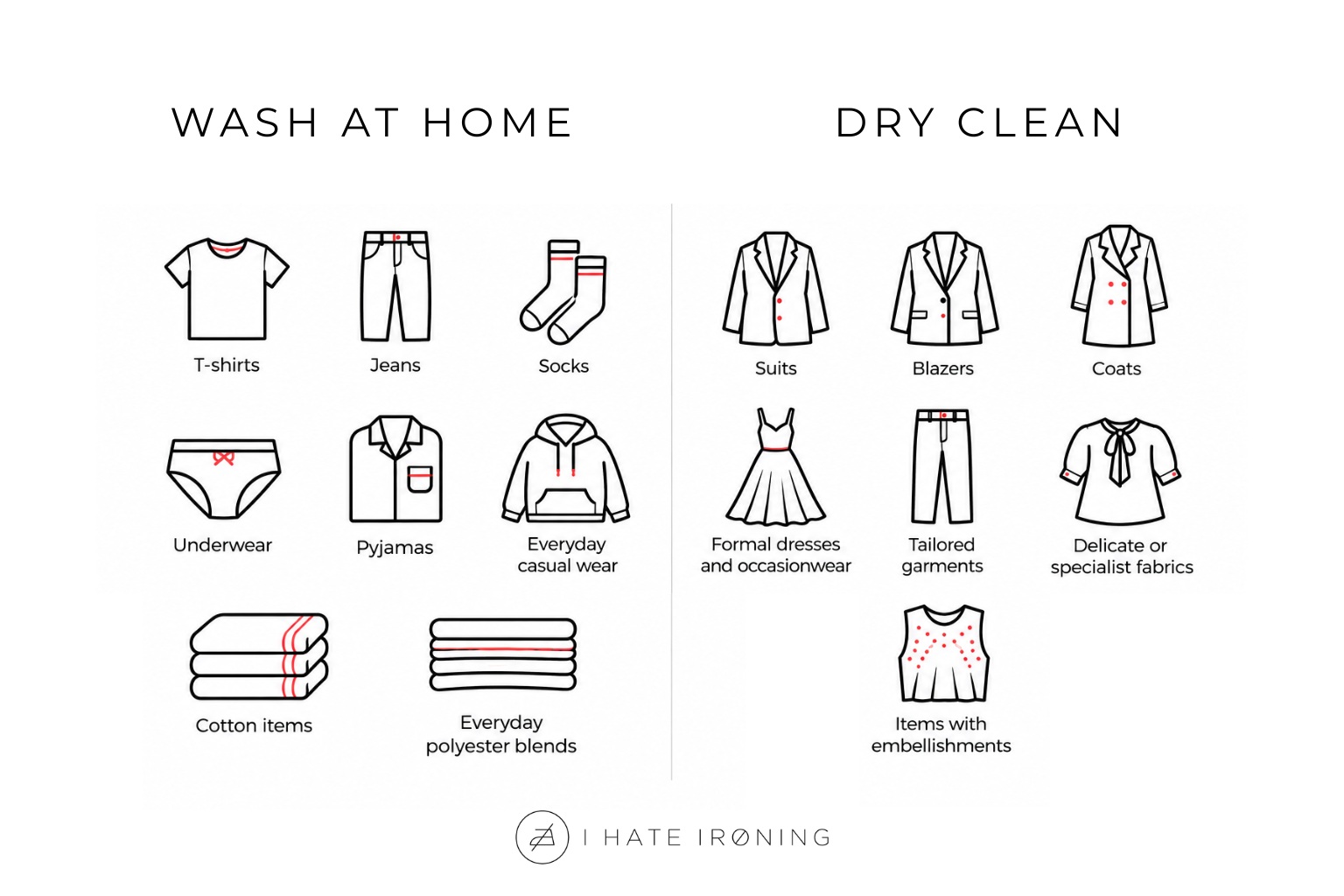
For many everyday garments, washing at home is exactly what you should be doing. Cotton T-shirts, underwear, socks, pyjamas and plenty of casual clothing are designed to withstand regular machine washing.
Dry cleaning becomes more useful when water, heat or agitation could affect the fabric, construction, colour or finish of a garment.
A tailored wool blazer, for example, has a very different construction from a cotton T-shirt. Washing it at home could affect not only the wool itself but also the lining, interfacing, padding and overall shape of the jacket.
The best cleaning method is therefore the one that cleans the garment effectively while protecting its fabric, construction and appearance.
When Should You Dry Clean Clothes?
Your first point of reference should always be the garment’s care label. If an item is labelled “Dry Clean Only”, there’s usually a reason the manufacturer is advising against washing it at home.

You should also consider professional dry cleaning when:
- The garment is made from a delicate or specialist fabric.
- It has a structured or tailored construction.
- The item contains embellishments, beading or delicate detailing.
- You’re dealing with a difficult oil, grease or set-in stain.
- The garment is particularly valuable or sentimental.
- You’re unsure how the fabric will react to water.
- Washing could affect the item’s colour, texture, size or shape.
Suits, formal dresses, tailored trousers, coats and occasionwear are some of the most common examples.
Even when a care label doesn’t strictly require dry cleaning, professional cleaning can sometimes be the safer option for an item you’d rather not risk damaging.
Which Fabrics Should Usually Be Sent to Dry Cleaners?
There isn’t a universal rule for every fabric, as the construction and manufacturer’s instructions also matter. However, certain materials commonly require more careful cleaning.
Wool
Most wool garments should be hand washed, but structured wool clothing such as suits, coats and tailored trousers is often better professionally cleaned.
Wool fibres can shrink, felt or become misshapen when exposed to the wrong combination of water, heat and agitation.
Silk
Silk can be particularly sensitive to water, detergents and friction. Some washable silk garments can be carefully hand washed, but others may experience colour bleeding, water marks, shrinkage or changes to their finish.
Always check the label before cleaning silk at home.
Cashmere
Some cashmere can be gently hand washed, and washing isn’t automatically harmful to the fibre. However, temperature, agitation and drying technique all matter.
If the garment is structured, embellished, particularly valuable or specifically labelled for dry cleaning, professional care is usually the safer choice. Many dry cleaners can also carefully hand-wash the items instead of dry cleaning, following their care label instructions.
Velvet
Velvet can be difficult to clean at home because improper washing or pressing can affect its distinctive pile and texture. The safest method depends on the fibre content, so the care label is particularly important.
Linen
Many everyday linen garments are washable, but structured linen jackets, suits and garments with linings or specialist finishes may require dry cleaning to help maintain their shape.
Leather and suede
Leather and suede shouldn’t generally be treated like ordinary washable fabrics. They require specialist cleaning methods designed to protect their colour, texture and finish.
The important thing to remember is that fabric isn’t the only consideration. A material may technically tolerate water while the complete garment does not.
When Is It Safe to Wash Clothes at Home?
For plenty of clothing, washing at home is both safe and practical.
Everyday garments made from cotton, polyester and other washable materials can usually be machine washed, provided you follow the care instructions.

Before putting an item into the washing machine, check:
The care label: Look for the recommended temperature, cycle and drying instructions.
The fabric: Delicate fibres may require a gentler cycle or hand washing.
The colour: Dark, bright and new garments may need to be separated to reduce the risk of colour transfer.
The construction: A fabric might be washable while padding, linings, embellishments or other components are not.
The stain: Certain stains need treatment before washing, while others can become more difficult to remove if exposed to heat.
When in doubt, using a cooler temperature and gentler cycle can reduce unnecessary stress on washable clothes, but this shouldn’t override the instructions on the care label.
Does Dry Cleaning Remove Stains Better Than Washing?
It depends on the stain.
Water-based stains and everyday dirt can often respond very well to normal laundering. Dry cleaning, however, can be particularly effective for oily and greasy stains because of the solvents used in the cleaning process.
Professional cleaners also have another advantage: stain identification and targeted pre-treatment. Different stains require different treatments. Red wine, cooking oil, makeup, coffee and ink don’t necessarily respond to the same cleaning products or techniques.
At ihateironing, garments are inspected so stains can be identified and treated as part of the cleaning process. If you know what caused a stain, you can tell us when you place your order. That information will help determine the most appropriate treatment.
Can Washing at Home Damage Clothes?
Yes, particularly when an item isn’t designed to be washed in a conventional machine.
Some of the most common problems include:
- Shrinkage: Heat and agitation can cause certain natural fibres to contract.
- Colour loss or bleeding: Dyes may fade or transfer when exposed to water or inappropriate detergents.
- Loss of shape: Tailored jackets, coats and dresses may contain internal structures that can distort during washing.
- Fabric damage: Aggressive cycles can stretch, pill or weaken delicate fibres.
- Damage to embellishments: Beading, sequins, embroidery and decorative elements may loosen or become damaged.
- Heat damage: Washing or tumble drying at too high a temperature can shrink, distort or permanently affect some fabrics.
Damage doesn’t necessarily just happen after a single wash. Repeatedly cleaning clothes using unsuitable temperatures, detergents or cycles can gradually shorten their lifespan.
How to Decide Whether to Wash or Dry Clean
If you’re standing in front of the washing machine wondering whether to risk it, start with the care label.
Then ask yourself a few simple questions:
- What does the care label say?
“Dry Clean Only” should generally be treated as an instruction rather than a suggestion. - What is the garment made from?
Check the fibre composition as well as the cleaning symbols. - Is the garment structured?
Suits, blazers and tailored coats may need professional cleaning even when their outer fabric seems relatively robust. - Does it have delicate detailing?
Beading, embroidery, sequins, pleats and specialist finishes can make home washing riskier. - What kind of stain are you dealing with?
A difficult grease or oil stain may benefit from professional treatment. - How valuable is the item to you?
If it’s expensive, sentimental or difficult to replace, avoiding an experimental wash at home may be worthwhile.
When you’re unsure, asking a professional cleaner before washing is much easier than trying to reverse shrinkage, colour bleeding or fabric damage afterwards.
Can You Wash Clothes Labelled “Dry Clean Only”?
We wouldn’t recommend it.
There’s an important difference between labels that say “Dry Clean” and those that specifically say “Dry Clean Only”.
Some garments labelled “Dry Clean” may tolerate alternative cleaning methods, depending on their fabric and construction. “Dry Clean Only”, however, indicates that the manufacturer considers professional dry cleaning the appropriate method for the garment.
You may find online advice suggesting that certain “Dry Clean Only” garments can be carefully hand washed. Sometimes people do so without an obvious problem, but it’s still a risk.
A garment can react to water in ways that aren’t immediately predictable. It may shrink, colours can run, finishes can change and internal components can lose their structure.
For something inexpensive that you’re prepared to risk, that’s ultimately your decision. For a favourite coat, designer garment, tailored suit or special-occasion dress, we’d recommend following the label.
Benefits of Professional Dry Cleaning
Professional dry cleaning isn’t necessary for everything in your wardrobe. Where it becomes valuable is in caring for clothes that need more attention than a standard wash cycle can provide.
One of the biggest benefits is specialist garment care. Professional cleaners can assess the fabric, construction and stains before deciding how an item should be treated.
Dry cleaning can also help protect structured garments. Jackets, suits and coats often contain linings, padding and interfacing that give them their shape. Professional cleaning and finishing help preserve that construction.
There’s also the benefit of professional stain treatment. Rather than applying a general-purpose stain remover and hoping for the best, cleaners can identify stains and use appropriate treatments.
Finally, professional pressing and finishing can restore the shape and appearance of clothing in a way that’s difficult to replicate with an iron at home.
For valuable pieces, specialist fabrics and clothes you want to keep wearing for years, the right professional care can be an important part of extending their usable life.
Common Mistakes to Avoid
One of the easiest ways to look after your clothes for longer is simply to avoid cleaning them incorrectly.
Ignoring the care label: The symbols are there for a reason. Check them before washing, drying or ironing an unfamiliar garment.
Assuming every stain needs hot water: Heat isn’t always better. In some cases, it can make a stain more difficult to remove.
Rubbing stains aggressively: Scrubbing can damage fibres and spread the stain. Blotting is often safer until the garment can be properly treated.
Using too much detergent: More detergent doesn’t necessarily mean cleaner clothes and can leave residue behind.
Overloading the washing machine: Clothes need room to move for effective cleaning and rinsing.
Tumble drying without checking the label: High heat is responsible for plenty of accidental shrinkage and fabric damage.
Washing a structured garment because its outer fabric seems washable: Always consider the whole garment, not just the material you can see.
Experimenting with valuable clothes: A delicate designer dress isn’t the ideal place to test a home dry-cleaning hack.
Wash or Dry Clean? The Bottom Line
Most everyday clothing doesn’t need to be dry cleaned. If a garment is designed for machine or hand washing, following its care instructions is usually the simplest and most appropriate way to keep it clean.
Dry cleaning is most useful when you’re dealing with delicate fabrics, structured tailoring, specialist materials, difficult stains and garments that specifically say “Dry Clean Only”.
The goal shouldn’t be to dry clean everything or wash everything at home. It’s to choose the cleaning method that gives each garment the care it needs.
At ihateironing, we make that decision easier by collecting your clothes directly from your door and placing them in the hands of experienced cleaning professionals. From everyday dry cleaning and workwear to coats, dresses and specialist garments, each item is assessed and cared for according to its individual requirements.
